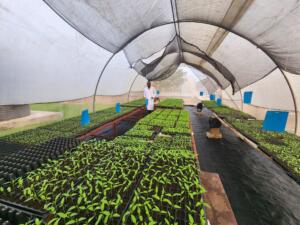
Climate change is no longer a distant concern; it is one of the most urgent challenges affecting agriculture and food production today. Across Southwest Nigeria, farmers are already experiencing its impact, especially in greenhouse farming systems that are typically designed for controlled environments.
Climate change refers to long-term shifts in temperature and weather patterns, largely driven by human activities such as burning fossil fuels, deforestation, and unsustainable land use. These activities increase greenhouse gas emissions, which trap heat in the atmosphere and cause global temperatures to rise.
In 2025 and early 2026, these changes became more noticeable and disruptive, particularly for greenhouse farmers growing sweet bell peppers.
Rising Temperatures Are Disrupting Greenhouse Conditions
One of the most immediate challenges is rising temperatures. In many parts of Southwest Nigeria, daytime temperatures now range from 31°C to 40°C, far above the optimal 20°C to 28°C for sweet bell pepper production.
This excessive heat places significant stress on plants, making it difficult for them to grow, flower, and produce quality fruits. Even in controlled greenhouse environments, maintaining ideal conditions has become more challenging and costly.
Unpredictable Rainfall Patterns Are Creating New Risks
Rainfall patterns have also become more erratic. Farmers are now observing:
- Early rainfall onset (March–April in some states)
- Prolonged rainy seasons in coastal areas
- Unexpected rainfall even during typically dry months like January and February (as seen in early 2026)
These shifts disrupt farming schedules and make planning much harder, especially for greenhouse operations that depend on predictable climate patterns.
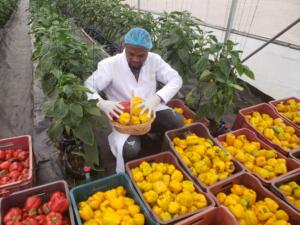
Key Effects on Sweet Bell Pepper Production
1. Poor Flowering and Reduced Fruit Set
High temperatures above 32°C directly affect plant reproduction. Farmers have reported:
- Flower abortion
- Poor pollination
- Reduced fruit set
This explains the widespread flower drop experienced between mid-2025 and early 2026, leading to lower yields than expected.
2. Increased Pest Pressure (A Growing Concern)
Warmer temperatures are creating ideal conditions for pests such as the following:
- Thrips
- Whiteflies
- Mites
Heat speeds up pest life cycles, allowing them to reproduce faster and in greater numbers. For example, thrips populations increase rapidly in warmer conditions, leading to more infestations within a single season.
In addition, fluctuating humidity levels can worsen pest outbreaks and increase the spread of plant viruses such as Tomato Spotted Wilt Virus (TSWV). This results in:
- Higher crop losses
- Increased cost of pest control
- Greater production risks for farmers
3. Disease Outbreaks Are Becoming More Frequent
Prolonged rainfall and high humidity levels have led to a rise in plant diseases, including the following:
- Powdery mildew
- Botrytis
- Leaf blights
- Bacterial infections
Waterlogging from continuous rainfall, especially in early 2026, has also contributed to root diseases. These conditions have significantly affected greenhouse productivity and crop health.
4. Decline in Fruit Quality
Climate instability is not just reducing yields—it is also affecting the quality of harvested peppers. Farmers are seeing:
- Smaller fruit sizes
- Irregular fruit shapes
- Sunscald caused by extreme heat
- Fruit cracking due to inconsistent watering patterns
These issues reduce market value and overall profitability.
5. Disruption of the Farming Calendar
Climate change is also interfering with traditional production timelines:
- Early rains are disrupting nursery planning
- Delayed dry seasons (harmattan shifts) are affecting fruit ripening
This uncertainty makes it harder for farmers to plan planting cycles, manage resources, and meet market demand.
What Can Be Done? Practical Ways to Adapt
To reduce the impact of climate change on greenhouse farming, a combination of adaptation and sustainability strategies is essential:
- Transition to renewable energy sources for greenhouse operations
- Improve energy efficiency in farming systems
- Adopt climate-smart agricultural practices
- Strengthen pest and disease management strategies
- Protect and restore natural ecosystems
- Promote sustainable food production systems
Final Thoughts
Climate change is already reshaping greenhouse farming in Southwest Nigeria, particularly for sweet bell pepper production. While the challenges are significant, they are not insurmountable.
With the right strategies, innovation, and awareness, farmers can adapt to these changing conditions and continue to produce high-quality crops. Striking the right balance between productivity and sustainability will be key not just for business success but for long-term food security.
In practice, consistent application of climate-smart greenhouse methods is what separates unstable production systems from reliable ones. This is the approach we continue to prioritize at PSF Vegetables, ensuring steady production, quality control, and resilience in an increasingly unpredictable climate.